
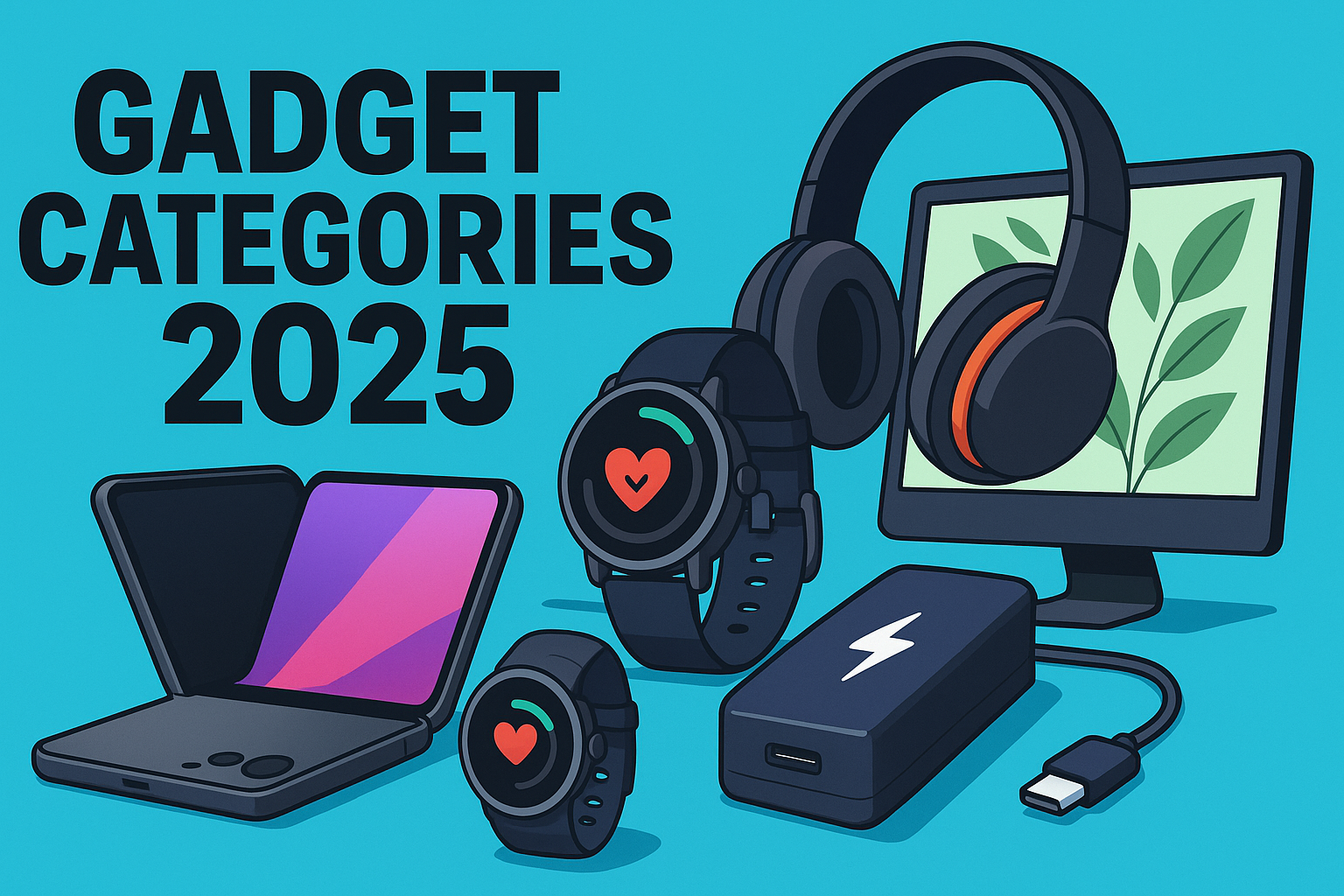
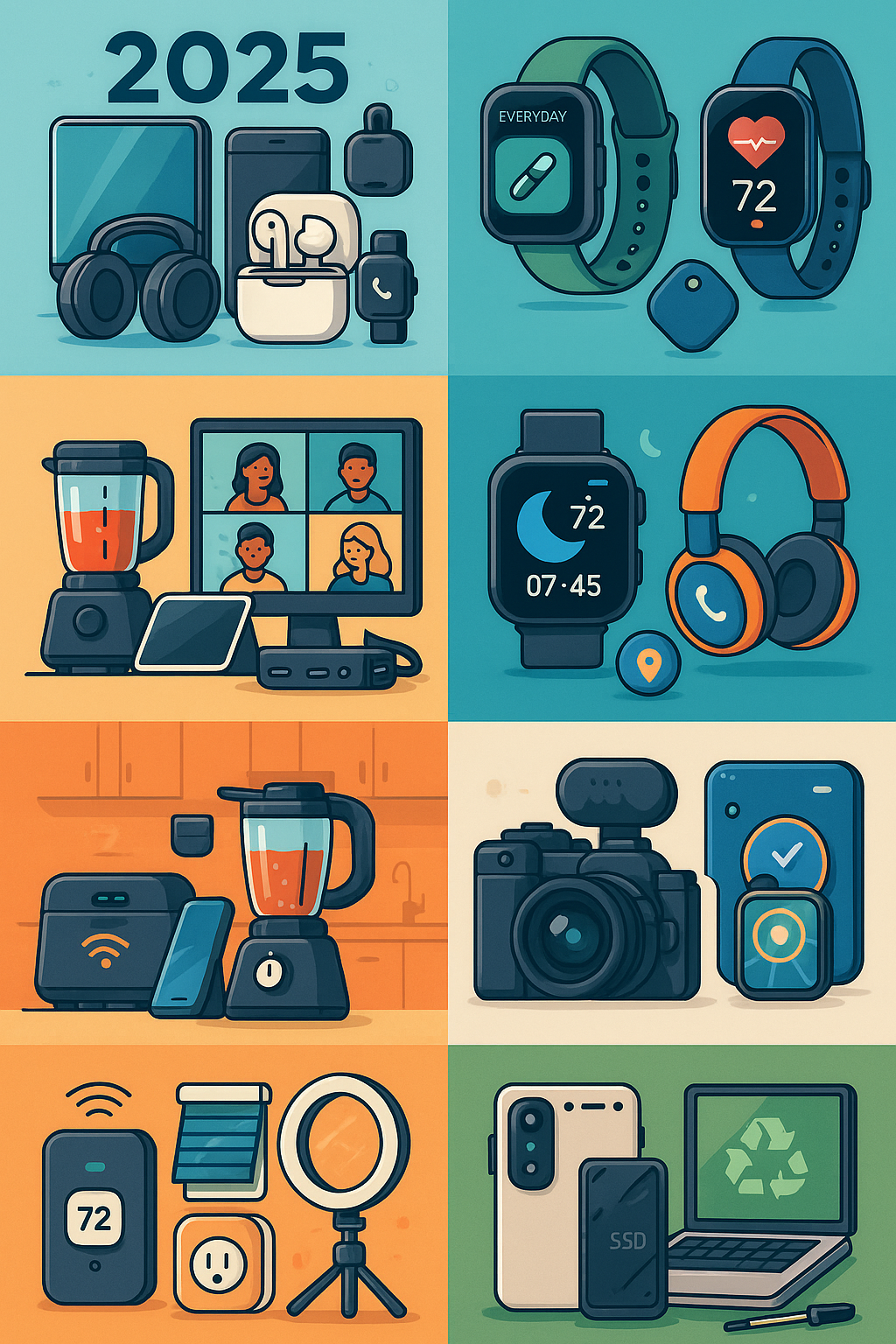
Technology in 2025 can feel overwhelming. Every week seems to bring a new wave of so called smart devices, from robotic toothbrushes to self warming cups. Mixed into that noise are products that genuinely improve your day. This guide focuses on the Gadget Categories 2025 that truly matter. These are the groups of devices that save time, improve comfort or help you work more efficiently.
If you want to upgrade your workspace, reduce energy use at home or begin a creative side project, the categories below offer dependable returns rather than hype. They are practical, reliable and worth the money long term.
1. Everyday Carry Tech that actually makes life easier
This is the group that you interact with constantly. Your phone, the small tracker on your keys and the power bank you reach for during emergencies. Everyday carry technology has evolved rapidly. Folding phones are now lighter and stronger. Many weigh less than two hundred and twenty grams. Power banks now support fast pass through charging at one hundred and forty watts. Bluetooth trackers finally support rechargeable batteries instead of disposable ones.
Important change: dual electronic SIM support has become the modern standard. If a phone still uses a physical SIM slot, the device is likely outdated stock.
2. Quiet and accurate health wearables
Wearables have shifted from simple step counters to reliable early indicators of health patterns. The latest models provide alerts for heart rhythm issues, sleep quality, stress levels and more. These features give you meaningful insight instead of surface level fitness numbers.
For accuracy, choose wearables with skin temperature accuracy of plus or minus zero point two degrees Celsius and an eighteen bit sensor. These specifications help produce readings that are accurate enough for medical discussions.
3. Space saving kitchen upgrades
The modern kitchen is full of one purpose appliances that quickly gather dust. The best choices in 2025 are reversible or combination devices that save counter space. A popular trend is the combination of an air fryer and an induction plate, which reduces the number of appliances you need.
Manufacturers now list noise levels. Anything below fifty two decibels allows for cooking without waking others at home.
4. Hybrid work power stations
Hybrid and remote work continue to grow. Docking stations have become essential for people using multiple monitors or high powered laptops. The best stations support Thunderbolt five, four thousand pixel screens at one hundred and twenty hertz and charging above one hundred watts.
However, some stations split a single connection between many ports. This might work for keyboards but fails with high resolution cameras or external drives.
5. Audio and tracking devices for children
Children’s gadgets are now built with safety in mind. You will find headphones with volume limits, real satellite based tracking and clearly labelled offline mode switches for use at school.
Parent technique: pair the device with a spare phone without a SIM card. This allows GPS to work without constant data tracking.
6. Energy smart home essentials
Energy saving technology is becoming more common. Smart plugs that track precise watt usage, solar powered blinds and thermostats that learn daily routines all provide quick savings. But it is important to avoid apps that hide real data. If an app does not allow data export in spreadsheet format, the claimed savings may not be accurate.
7. Creator equipment for side projects
If you create videos or tutorials, the right equipment makes a huge difference. For 2025, look for mirrorless cameras that record in ten bit colour and produce clean footage without overheating. Internal fan noise should remain under twenty decibels to avoid ruining recordings.
Memory card rule: choose cards marked V sixty or higher to avoid dropped frames.
8. Repair friendly technology
Repair scores are becoming more standard. Devices rated eight out of ten or higher last longer and are easier to maintain. They also hold higher resale value. Devices that require heating tools or glue to replace batteries are usually more expensive to maintain.
Products with official spare part support often keep fifteen to eighteen percent more resale value after two years.
Final Thought
The best technology is the kind you stop noticing because it performs so smoothly. Use these categories to guide your decisions throughout the year. Focus on reliability, usefulness and long term value instead of temporary trends. That approach will help you buy with confidence and avoid regret.