
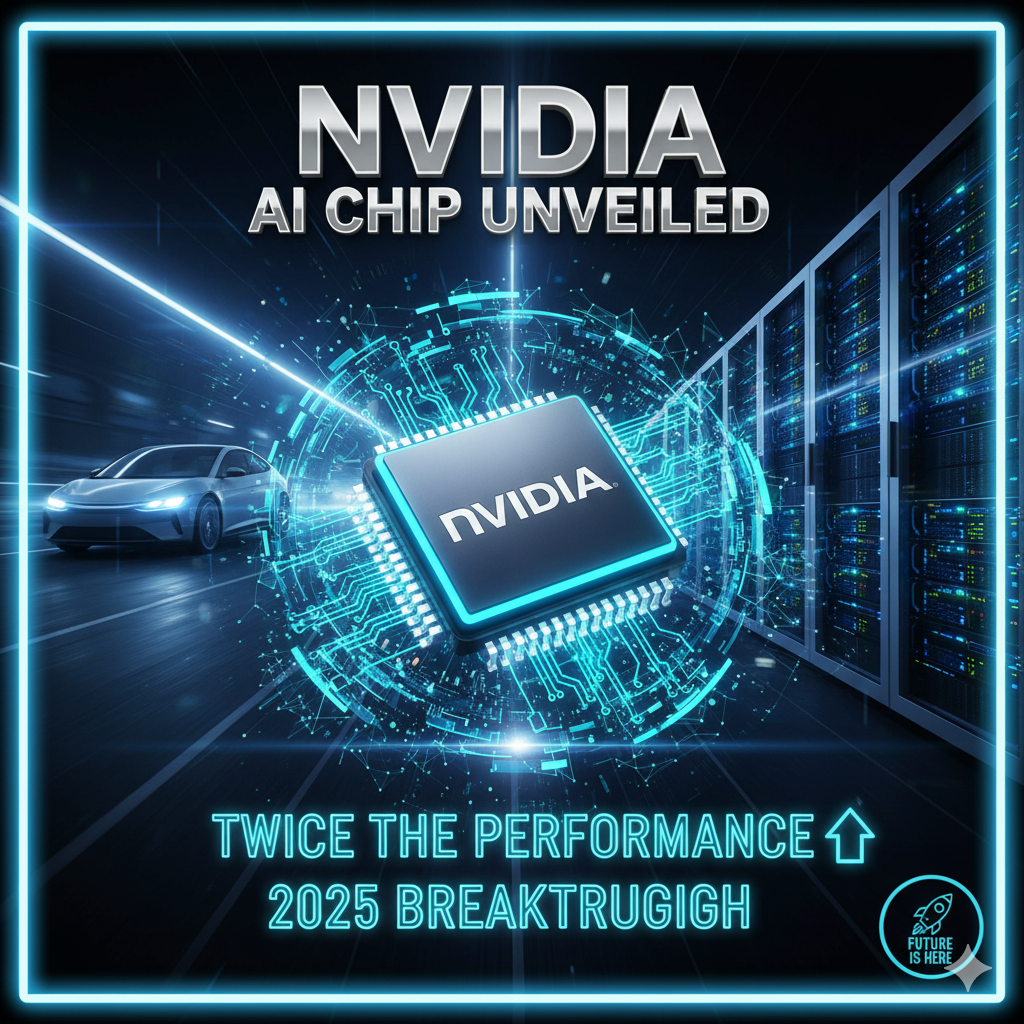
NVIDIA has unveiled its next-generation AI chip designed to power advanced artificial intelligence workloads and accelerate computing performance across industries. This breakthrough marks a significant step in 2025 as companies push boundaries in machine learning, robotics, and data processing.
Key Features of the New AI Chip
- Higher performance per watt – The new chip offers up to twice the performance of the previous generation while using less power, enabling greener and faster computing across data centres.
- On-device AI acceleration – It supports on-device artificial intelligence inference, reducing latency for applications in autonomous vehicles, robotics, and edge computing.
- Advanced security features – Built-in hardware encryption and trusted execution environments protect sensitive workloads and support secure AI models.
- Scalable architecture – From small embedded devices to massive data centre deployments, the new chip adapts to a wide range of use-cases.
Industry Impact and Use-Cases
- Autonomous vehicles: Automakers plan to integrate the chip into next-generation self-driving systems, allowing real-time data processing on the vehicle itself.
- Enterprise AI: Businesses adopting AI at scale will benefit from faster training and inference routines, reducing time-to-insight for large datasets.
- Edge and smart devices: With on-device capabilities, consumer electronics such as smartphones and smart cameras will include more intelligent features without relying fully on cloud connections.
Expert Comment
According to analysts at Gartner, “This release could change the economics of AI-enabled devices by bringing high-performance compute closer to the user, rather than relying on remote data centres.”
Challenges and Considerations
Despite the hype, the new chip faces challenges: manufacturing at scale, integration into existing systems, and ensuring software ecosystem support remain key hurdles. Device makers and enterprises will need time to adopt the new architecture fully.
Conclusion
With this new AI chip, NVIDIA has taken a bold leap forward in enabling advanced artificial intelligence across devices and industries. As 2025 progresses, we will likely see this chip embedded in mobility, edge computing, and enterprise platforms — marking a major step in the future of computing technology.