
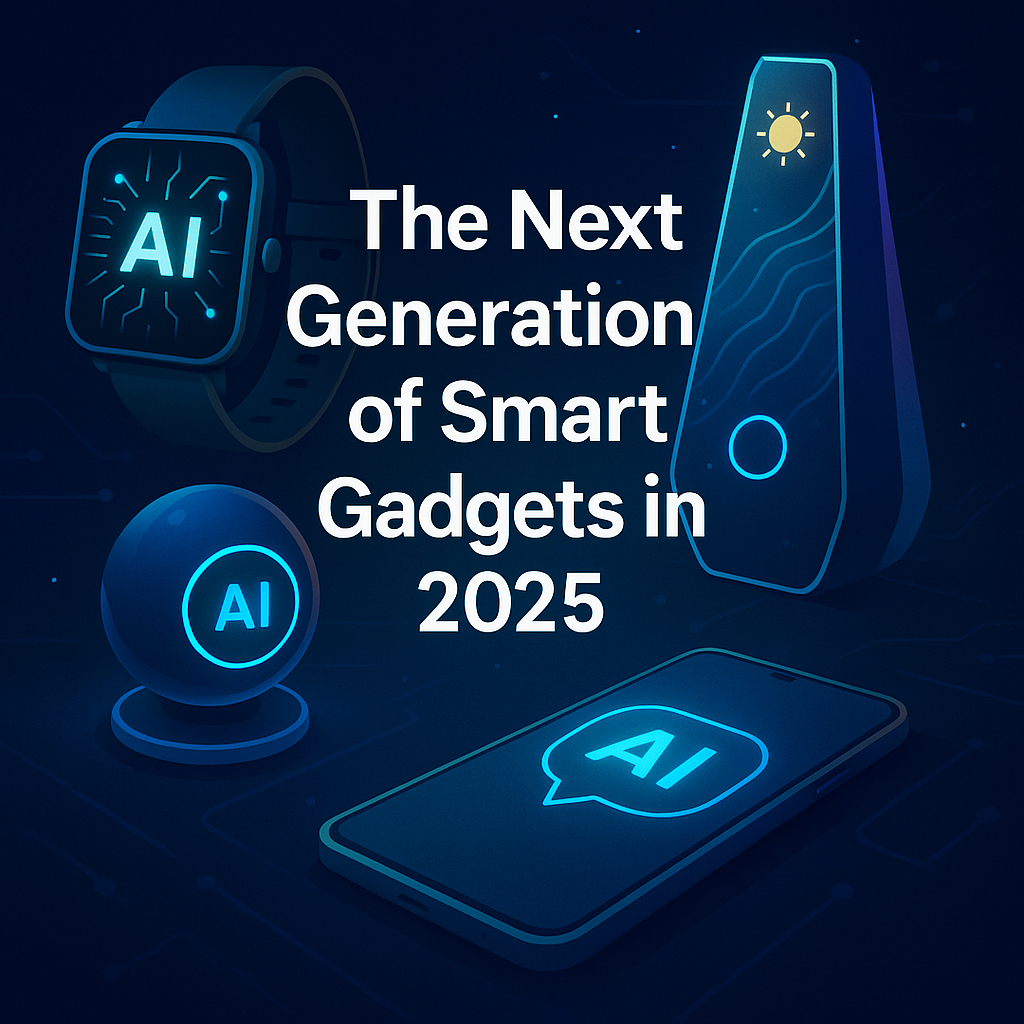
The Rise of Smart Gadgets: What’s Coming in 2025
Smart devices are about to become more intelligent, more personal, and more connected than ever.
Introduction
Technology in 2025 is set to transform everyday life as smart gadgets evolve from simple tools into intelligent companions. Instead of just tracking steps or turning lights on and off, the next generation of devices will be able to predict needs, automate daily routines, and provide meaningful insights powered by artificial intelligence.
From health-focused wearables and predictive home automation to portable AI assistants and smarter entertainment systems, these innovations will touch almost every part of our lives. Below is a detailed look at the biggest smart gadget trends expected to shape 2025.
1. AI Wearables That Understand Your Health
Wearables have been popular for years, but most of them still behave like basic trackers. In 2025, wearables are expected to become full health companions that understand patterns rather than just counting numbers.
What’s changing?
- Continuous monitoring of heart rate, breathing, stress levels, and sleep cycles.
- Smarter sleep analysis using multiple sensors instead of just “time in bed”.
- Real-time alerts when unusual patterns are detected (for example, irregular heart rhythm).
- Personalized recommendations for exercise, hydration, recovery, and daily habits.
These devices will not replace medical professionals, but they will help people understand their bodies better and act early when something feels wrong.
2. Predictive Smart Home Devices
Many homes already use smart bulbs, plugs, and voice assistants. The next big step is predictive automation — devices that make decisions automatically instead of waiting for manual commands.
Key improvements we’ll see:
- Thermostats that learn your schedule and adjust temperature before you arrive.
- Lights that adapt to the time of day and your activity, improving focus or relaxation.
- Fridges that track expiry dates and suggest recipes to reduce food waste.
- Security systems that analyze patterns and highlight unusual activity around the house.
The result is a home that feels more comfortable, safer, and more energy-efficient, with less effort from the user.
3. Pocket-Sized AI Assistants
Smartphones are powerful, but they are also full of distractions. In 2025, we are likely to see more dedicated, pocket-sized AI assistants designed to do one thing extremely well: help you quickly.
These compact gadgets could:
- Transcribe and summarize conversations or meetings on the spot.
- Translate speech between languages in real time while travelling.
- Capture voice notes and automatically organize them into tasks, ideas, or reminders.
- Answer quick questions without needing to unlock or browse a phone.
For students, professionals, and travellers, this type of device can be a distraction-free way to access intelligence anywhere.
4. Smarter Entertainment Gadgets
Entertainment hardware is also getting an upgrade. Smart TVs, sound systems, and gaming accessories will use more AI to deliver a personalised experience.
- Smart projectors with automatic focus, screen sizing, and colour correction.
- More comfortable VR headsets with better resolution and longer battery life.
- Soundbars that scan the room and tune audio for clearer dialogue and deeper bass.
- Game controllers and accessories that adapt vibration and feedback in real time.
Movie nights and gaming sessions will feel more immersive without complicated manual calibration or expensive custom setups.
5. Intelligent Productivity Tools
Productivity will be heavily supported by new smart gadgets that reduce friction in daily work and study.
Examples of what’s coming:
- Digital notebooks that turn handwriting into searchable, cloud-synced documents.
- Smart pens that record audio while you write and link playback to each line of notes.
- Portable scanners that instantly convert pages into clean, editable PDFs.
- AI-assisted desk lamps that adjust brightness and colour temperature based on the time of day.
Instead of spending time organising files and notes, users will be able to focus on thinking and creating.
6. Next-Generation Security & Monitoring Gadgets
Home and personal security will continue to improve with the help of smarter and more affordable hardware.
- Doorbell cameras with clearer video and better low-light performance.
- Smart locks that support biometrics, one-time digital keys, and remote access.
- Cameras that recognise familiar faces and send alerts only when something unusual happens.
- Pet and package monitors that send specific notifications instead of generic motion alerts.
These features reduce false alarms, make alerts more meaningful, and provide greater peace of mind for homeowners and renters.
7. Portable Smart Health Scanners
Another strong trend is the rise of compact health-checking devices that anyone can use at home or on the go.
Typical examples might include:
- Wireless blood pressure monitors that send results to a secure app.
- Portable ECG devices that create reports for doctors to review.
- Smart thermometers that track temperature history for the whole family.
- Skin-analyzing gadgets that highlight dryness, sun damage, or irritation.
These tools are not intended to replace professional diagnosis, but they can help users monitor changes and seek medical advice earlier.
8. Smarter Kitchen Gadgets
The kitchen is becoming one of the most exciting places for smart technology. Devices are focusing on convenience, safety, and healthier cooking.
- Smart ovens and air fryers that automatically set time and temperature based on the food type.
- Coffee machines that remember each family member’s favourite recipe.
- Connected scales that calculate calories and nutritional values while you cook.
- Voice-controlled timers and recipe assistants that guide you step by step.
For busy people and beginners, these tools reduce guesswork and make home-cooked meals easier to prepare.
9. Sustainability-Focused Smart Gadgets
As awareness of environmental impact grows, more devices are being designed with sustainability in mind. In 2025, we can expect:
- Smart plugs and meters that show real-time energy usage and suggest ways to save power.
- Solar-powered chargers and outdoor lights with better efficiency.
- Appliances with “eco modes” that automatically reduce water and electricity consumption.
- Recyclable materials and modular parts to make repairs easier instead of replacing whole devices.
These changes not only help the planet but can also reduce monthly bills for households.
How to Prepare for the Next Wave of Smart Gadgets
With so many innovations arriving, it is important for users to choose devices wisely rather than buying every new product that appears.
- Start with real needs: Focus on gadgets that solve everyday problems such as time management, security, or health tracking.
- Check compatibility: Make sure new devices work with your existing ecosystem (Google, Apple, Amazon or others).
- Review privacy settings: Understand what data is collected, where it is stored, and how it is used.
- Think long-term: Look for brands that offer regular software updates and have a good support history.
Conclusion
Smart gadgets in 2025 will be more than just “cool tech”. They will quietly support our health, safety, productivity, and comfort in the background. From predictive homes and intelligent wearables to pocket AI assistants and eco-friendly devices, the future of smart technology is about making life easier and more efficient, not more complicated.
For users, the key is to stay informed, choose devices that genuinely add value, and always keep privacy and security in mind. If used wisely, the next generation of smart gadgets has the potential to turn everyday routines into smarter, smoother experiences.